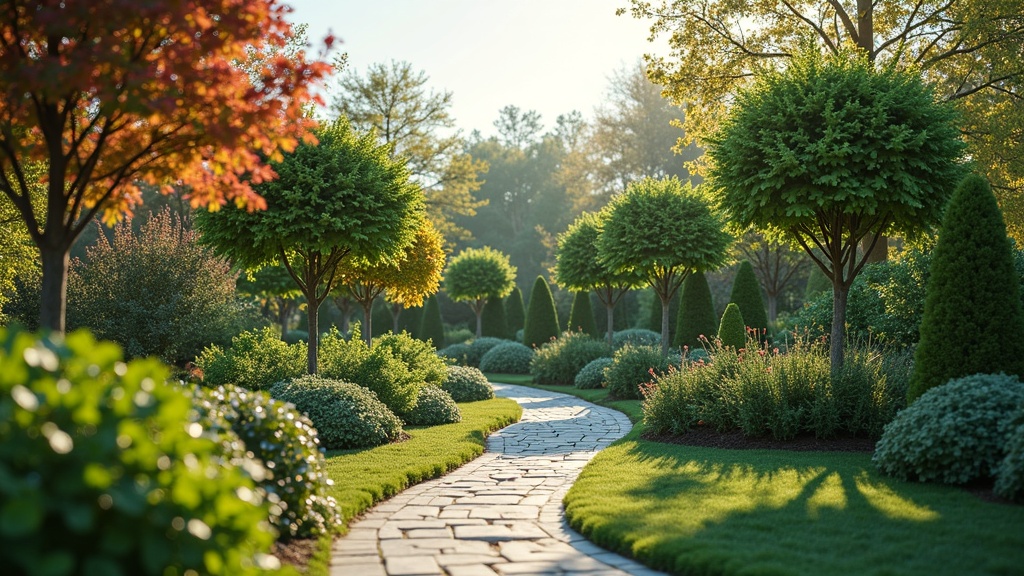
Understanding Ornamental Trees Gardening: A Practical Guide
Understanding ornamental trees gardening is essential for creating a garden that offers beauty and structure across all four seasons. This guide covers species selection, planting techniques, long-term care, and common pitfalls to help you cultivate thriving ornamental specimens.
Table of Contents
- What Are Ornamental Trees?
- Selecting the Right Tree for Your Space
- Planting and Establishment Essentials
- Maintenance and Longevity
- Frequently Asked Questions
- Comparison: Deciduous vs. Evergreen Ornamentals
- Practical Tips for Success
- Final Thoughts on Ornamental Trees Gardening
- References
Understanding ornamental trees gardening is the practice of selecting, planting, and maintaining trees chosen primarily for their aesthetic contributions – flowers, foliage, bark, and shape – rather than for fruit or timber production. Success depends on matching species to site conditions, proper planting depth, and consistent early care.
Quick Stats: Ornamental Trees Gardening
- Mature ornamental trees can increase surrounding property values by an average of 7 percent in residential neighborhoods (U.S. Forest Service, Pacific Northwest Research Station, 2024)[1]
- Urban and ornamental trees in the United States remove an estimated 711,000 metric tons of air pollution annually (U.S. Forest Service, Northern Research Station, 2024)[2]
- Newly planted ornamental trees typically need watering once a week during their first growing season (Royal Horticultural Society, 2024)[3]
Understanding ornamental trees gardening begins with a simple truth: a well-chosen tree transforms a garden from a collection of plants into a living landscape. Unlike fruit or timber trees, ornamentals are selected for their visual and sensory contributions – spring blossoms, autumn leaf colour, textured bark, or graceful winter silhouettes. Whether you have a compact urban courtyard or a sprawling suburban lot, the principles of selection, planting, and care remain largely the same. This article walks through the essential steps, from choosing the right species to maintaining it for decades of enjoyment.
What Are Ornamental Trees?
Understanding ornamental trees gardening starts with a clear definition. An ornamental tree is any woody perennial selected and cultivated primarily for its decorative qualities rather than for commercial fruit, nut, or timber production. These trees earn their place in a garden not just for flowers, but for multi-season interest – blossom in spring, cooling shade in summer, colour in autumn and structure in winter (Woodland Trust, 2024)[4]. Popular examples include Japanese maple (Acer palmatum), flowering dogwood (Cornus florida), crabapple (Malus spp.), and eastern redbud (Cercis canadensis).
Key Characteristics
Ornamental trees typically share several traits. They are generally smaller than forest trees, with mature heights ranging from 3 to 8 metres depending on the species (University of Vermont Extension, 2024)[5]. Many produce showy flowers or distinctive foliage, and their growth habits are often compact or weeping by nature. They also tend to have slower growth rates than timber species, which makes them ideal for gardens where space is limited but visual impact is desired. Understanding ornamental trees gardening means appreciating that these trees are investments in long-term beauty, not quick results.
Selecting the Right Tree for Your Space
Selecting the correct ornamental tree requires honest assessment of your garden’s conditions. When choosing an ornamental tree, understanding its eventual size is crucial – many so-called ‘small’ trees will dominate a modest garden if given 20 years (Royal Horticultural Society, 2024)[3]. The best ornamental trees are those that are matched to the garden’s soil, aspect and available space – if you get those basics right, most species are remarkably low maintenance (Royal Horticultural Society, 2024)[6].
Site Assessment
Before purchasing, evaluate your site’s sunlight exposure, soil type, drainage, and USDA hardiness zone. Many flowering ornamentals – such as dogwood and redbud – perform best in partial shade with well-drained, acidic soil. Japanese maples require protection from harsh afternoon sun and drying winds. The Royal Horticultural Society recommends that many small ornamental trees for gardens are best suited to plots where the tree can reach at least 3 to 6 metres in height at maturity without overcrowding the space (Royal Horticultural Society, 2024)[3]. Understanding ornamental trees gardening means matching the tree to the site, not the other way around.
Functional and Aesthetic Goals
Woody ornamental trees should be selected first for functional needs, such as shade or screening, and only then for aesthetic features like flowers or bark (NC State Extension, 2024)[7]. A tree planted purely for its pink blossoms will disappoint if it fails to provide the privacy screen you needed. Conversely, a shade tree that drops messy fruit may be a poor choice near a patio. For more detailed advice on how to evaluate your garden’s needs, consider exploring resources that illustrate the importance of thorough research before committing to a long-term investment. Similarly, understanding iterative optimisation – a concept that applies equally to refining your garden’s tree selection over time.
Planting and Establishment Essentials
Proper planting is the single most important factor in an ornamental tree’s long-term health. Understanding ornamental trees gardening requires mastering the basics of planting depth, hole preparation, and aftercare. A common mistake is planting too deeply, which suffocates the roots and eventually kills the tree.
Planting Technique
Dig a hole two to three times as wide as the root ball but no deeper than the root ball’s height. The top of the root ball should sit slightly above ground level to allow for settling. Backfill with native soil – do not amend with rich compost, as this can discourage roots from spreading into the surrounding earth. Water thoroughly after planting and apply a 5–8 cm layer of organic mulch around the base, keeping it away from the trunk to prevent rot. Scaffold branches on ornamental trees should be spaced at least 20 centimetres and preferably up to 50 centimetres apart vertically to form a strong structure (NC State Extension, 2024)[7]. This spacing ensures a balanced canopy that resists storm damage.
Watering and Mulching
The Royal Horticultural Society advises that newly planted ornamental trees typically need watering once a week during their first growing season, and more often in hot, dry weather, to establish a healthy root system (Royal Horticultural Society, 2024)[3]. A deep, slow soak is far more effective than frequent shallow sprinkling. Mulch conserves soil moisture, moderates soil temperature, and suppresses weeds that compete for water and nutrients. Understanding ornamental trees gardening means recognising that the first two years are critical – consistent care during this period sets the stage for decades of low-maintenance beauty.
Maintenance and Longevity
Once established, ornamental trees require relatively little intervention beyond occasional pruning and monitoring for pests. However, understanding ornamental trees gardening includes knowing when and how to intervene to preserve both health and form.
Pruning and Training
Prune in late winter or early spring while the tree is still dormant. Remove dead, diseased, or crossing branches first, then thin the canopy to improve air circulation and light penetration. For young trees, focus on establishing the scaffold branch structure mentioned earlier. Avoid heavy pruning of mature ornamentals unless necessary – excessive cutting can stimulate weak, upright growth that ruins the tree’s natural shape. Well-chosen ornamental trees are not just decoration – in residential landscapes they can significantly reduce energy use, improve air quality and increase property value (U.S. Forest Service, 2024)[8].
Pest and Disease Management
Common ornamental tree issues include aphids, scale insects, powdery mildew, and leaf spot diseases. Most healthy trees tolerate minor infestations without treatment. When intervention is needed, prefer horticultural oils or insecticidal soaps over broad-spectrum chemicals that harm pollinators. Trees, including ornamental species in gardens, can intercept up to 30 percent of the rainfall that hits their crowns, reducing stormwater runoff from residential landscapes (U.S. Environmental Protection Agency, 2024)[9]. This ecosystem service alone makes them worth protecting. For specific pest identification and control recommendations, consult your local extension service or a resource like ornamental tree pest management guides.
Important Questions About Ornamental Trees Gardening
What is the best time of year to plant an ornamental tree?
The ideal planting window is during the dormant season – late autumn after leaf drop or early spring before bud break. Cool temperatures and consistent rainfall allow roots to establish before the stress of summer heat. Container-grown trees can be planted throughout the growing season, but they will require more diligent watering. Understanding ornamental trees gardening means timing your planting to give the tree the best possible start.
How far should an ornamental tree be planted from a house or structure?
As a general rule, plant small ornamental trees (mature height under 8 metres) at least 3 to 4 metres from any building foundation. This distance prevents root damage to foundations and allows the canopy to develop fully without rubbing against walls. For larger ornamentals, increase the setback to 5 metres or more. Always consider the tree’s mature spread, not just its height, when siting.
Do ornamental trees need fertiliser?
Most ornamental trees do not require routine fertilisation if planted in reasonably fertile soil. Over-fertilising, especially with high-nitrogen products, can produce excessive leafy growth at the expense of flowers and can weaken the tree’s structure. A soil test every three to five years will reveal any deficiencies. If needed, apply a slow-release, balanced fertiliser in early spring. Understanding ornamental trees gardening includes knowing that less is often more when it comes to feeding.
Can ornamental trees be grown in containers?
Yes, many small ornamental trees – such as Japanese maples, dwarf crabapples, and star magnolias – thrive in large containers (at least 45–60 cm in diameter). Use a high-quality potting mix with good drainage, and ensure the container has adequate drainage holes. Container-grown trees require more frequent watering and fertilisation than in-ground specimens, and they may need winter protection in colder climates. This approach works well for patios, balconies, and small urban gardens.
Comparison: Deciduous vs. Evergreen Ornamentals
Choosing between deciduous and evergreen ornamentals depends on your seasonal priorities. Deciduous trees offer dramatic seasonal changes – spring flowers, summer shade, autumn colour, and winter structure – but provide no screening during cold months. Evergreen ornamentals, such as certain hollies and conifers, maintain year-round foliage for privacy and structure but lack the vibrant autumn display. Understanding ornamental trees gardening means weighing these trade-offs against your garden’s needs.
| Feature | Deciduous Ornamentals | Evergreen Ornamentals |
|---|---|---|
| Seasonal interest | High – flowers, autumn colour, winter silhouette | Moderate – constant foliage, berries in some species |
| Year-round screening | No – bare in winter | Yes – full coverage all year |
| Shade in summer | Excellent – full canopy | Partial to moderate |
| Light in winter | Allows sunlight through | Blocks light year-round |
| Maintenance pruning | Moderate – shaping and deadwood removal | Low to moderate – occasional thinning |
| Examples | Japanese maple, dogwood, crabapple, redbud | Holly, dwarf conifer, camellia, evergreen magnolia |
Practical Tips for Success
Understanding ornamental trees gardening is an ongoing learning process. Here are actionable tips to improve your results:
- Start with a soil test. Before digging a single hole, test your soil pH and nutrient levels. Most ornamentals prefer slightly acidic soil (pH 5.5–6.5). Adjust with lime to raise pH or sulphur to lower it, following test recommendations.
- Water deeply, not frequently. A long, slow soak once a week during the first two years encourages deep root growth. Use a soaker hose or drip irrigation rather than a sprinkler that wets the foliage.
- Mulch correctly. Apply 5–8 cm of organic mulch (wood chips, shredded bark) in a donut shape around the tree, leaving a 5 cm gap around the trunk. This prevents moisture against the bark and discourages rodents.
- Prune with purpose. Remove only dead, damaged, or crossing branches. Never remove more than 25 percent of the canopy in a single year. For young trees, focus on developing a strong central leader and evenly spaced scaffold branches.
- Monitor for stress. Yellowing leaves, stunted growth, or early leaf drop can indicate root problems, poor drainage, or pest infestations. Address issues promptly rather than waiting for the tree to recover on its own.
For more about Understanding ornamental trees gardening, see read the full guide on understanding ornamental trees gardening.
Final Thoughts on Ornamental Trees Gardening
Understanding ornamental trees gardening transforms the way you interact with your outdoor space. These trees are long-term companions that reward careful selection and patient care with decades of beauty, shade, and ecological benefits. Start small – choose one well-suited species, plant it correctly, and give it the attention it needs in its first two years. As you gain confidence, you can expand your collection and experiment with more unusual varieties. For further guidance on integrating ornamental trees into your landscape design, explore the detailed planting and care resources available on gardening websites.
Useful Resources
- Urban trees and property values. U.S. Forest Service, Pacific Northwest Research Station.
https://www.fs.usda.gov/pnw/research/urban-trees-and-property-values - Urban trees and air pollution removal. U.S. Forest Service, Northern Research Station.
https://www.nrs.fs.usda.gov/featured-stories/urban-trees-air-pollution-removal/ - How to choose the right tree for a small garden. Royal Horticultural Society.
https://www.rhs.org.uk/garden-inspiration/advice/choosing-trees-small-gardens - Best ornamental trees for small gardens. Woodland Trust.
https://www.woodlandtrust.org.uk/blog/2024/04/ornamental-trees-for-small-gardens/ - Ornamental trees for landscapes. University of Vermont Extension.
https://www.uvm.edu/extension/home-garden/ornamental-trees-for-landscapes - Planting ornamental trees – expert advice. Royal Horticultural Society.
https://www.rhs.org.uk/how-to/grow-ornamental-trees - Woody Ornamentals – Extension Gardener Handbook. NC State Extension.
https://content.ces.ncsu.edu/extension-gardener-handbook/11-woody-ornamentals - Benefits of urban trees for homes and communities. U.S. Forest Service.
https://www.fs.usda.gov/psw/topics/urban_forestry/benefits_trees/ - Soak Up the Rain: Trees. U.S. Environmental Protection Agency.
https://www.epa.gov/soakuptherain/soak-rain-trees