Google AI Training: Frameworks and Real-World Impact
Google AI training enables sophisticated machine learning. Explore its frameworks, industrial uses, and role in fields like mining. Learn more.
Table of Contents
- Core Concepts and Infrastructure
- How Google AI Training Transforms Industrial Sectors
- Hardware and Software Needs
- Comparing Google AI Training with Other Platforms
- Your Most Common Questions
- Side‑by‑Side Comparison
- Practical Tips
- Wrapping Up
Article Snapshot
Google AI training is the process of teaching machine learning models using Google’s cloud infrastructure and specialised hardware like TPUs. It underpins advances in natural language processing, computer vision, and industrial automation for sectors such as mining and ground stabilisation.
Google AI training has rapidly become a cornerstone of modern artificial intelligence development. By leveraging Google’s scalable infrastructure, businesses and researchers can build models that tackle complex challenges, from image recognition to predictive maintenance in heavy industries. In sectors like commercial grout mixing for mining and tunnelling, the insights derived from AI training are starting to reshape operational efficiency. This article explores the core concepts behind google ai training, its real‑world applications in industrial settings, the hardware and software required, and how it compares to other major platforms. Whether you’re involved in ground stabilisation or tech development, understanding google ai training is increasingly valuable.
Google AI Training: Core Concepts and Infrastructure
At its heart, google ai training relies on distributed computing and purpose‑built accelerators. Google developed Tensor Processing Units (TPUs) to handle the massive parallel computations required by modern neural networks. These chips work alongside TensorFlow and JAX frameworks, allowing engineers to distribute training workloads across thousands of nodes. The result is a dramatic reduction in model training time compared to traditional CPU‑only setups.
The training process itself involves feeding labelled data through a model, computing the error, and updating weights via backpropagation. Google’s Vertex AI platform abstracts much of this complexity, offering managed notebooks, autoML capabilities, and pipeline orchestration. For industries where time‑sensitive decisions matter – think real‑time grout injection monitoring in a tunnel – a model trained with google ai training can return predictions in milliseconds. Cloud‑based training also means that teams can spin up resources on demand, avoiding upfront hardware costs while maintaining high data security standards.
Another critical element is the availability of massive, cleaned datasets. Google has access to vast repositories of text, images, and sensor readings. When fine‑tuned on domain‑specific data, such as ground pressure readings or slurry viscosity measurements, the same foundational models become powerful tools for industrial automation. This versatility makes google ai training attractive well beyond the tech sector, extending into mining, tunnelling, and geotechnical engineering.
How Google AI Training Transforms Industrial Sectors
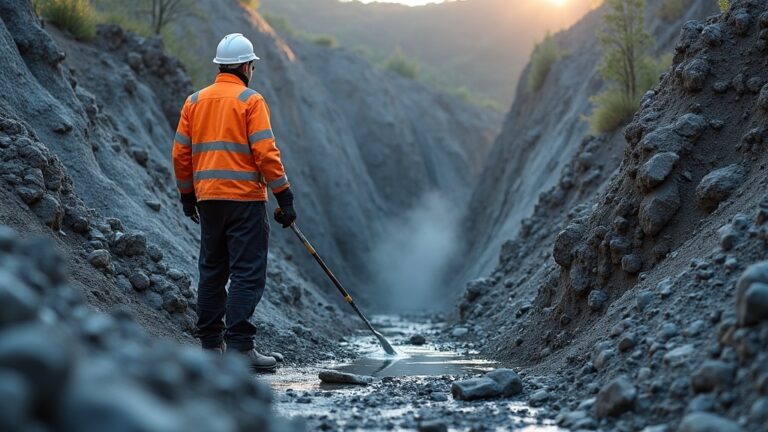
Mining and tunnelling operations generate enormous amounts of sensor data – vibration, temperature, pressure, and chemical composition. By applying google ai training to these streams, companies can build predictive models that anticipate equipment failure or identify unstable ground conditions. In commercial grout mixing, for example, a trained model can suggest optimal water‑to‑cement ratios based on real‑time soil characteristics, reducing waste and improving safety.
Deep learning models trained on Google infrastructure excel at pattern recognition. In ground stabilisation projects, these models can analyse historical injection data to predict where leaks might occur, allowing engineers to proactively adjust pumping schedules. The same principles hold for tunnel boring machine maintenance: vibration patterns that precede a cutter head failure become recognisable long before a human operator would notice. Such early warnings can save millions in downtime and repair costs.
Beyond the immediate job site, google ai training supports digital twins – virtual replicas of physical assets. When fed live data, a digital twin of a grout plant can simulate different mixing strategies, and the AI can recommend the one that minimises material usage while meeting strength targets. This integration of AI into core operational workflows represents a significant shift from reactive to proactive management, a change that is becoming essential in competitive infrastructure sectors.
Hardware and Software Needs for Google AI Training
While Google’s cloud platforms abstract away much of the heavy lifting, understanding the hardware underlying google ai training helps teams budget and optimise. TPUs are the most efficient option for TensorFlow workloads, but many projects also rely on NVIDIA GPUs when using PyTorch or custom CUDA kernels. For those exploring gpu for ai training, selecting the right hardware is critical. A balance between memory bandwidth, interconnects, and thermal design determines how quickly large models converge.
On the software side, Google’s ecosystem continues to expand. TensorFlow remains a workhorse, but JAX is gaining traction for research‑oriented projects that require automatic differentiation and just‑in‑time compilation. Vertex AI unifies these tools with a drag‑and‑drop interface, making google ai training accessible to engineers who are not full‑time data scientists. The platform also supports custom containers, allowing teams to bring their own libraries and dependencies.
Network infrastructure plays an equally important role. Multi‑node training requires high‑bandwidth, low‑latency interconnects. Google’s internal network fabric, built for TPU pods, can scale to thousands of chips with near‑linear speedups. For on‑premise deployments, similar results are achievable with InfiniBand‑connected GPU clusters. Whether in the cloud or at the edge, the key to successful google ai training is matching the right compute to the workload’s size and latency requirements.
Comparing Google AI Training with OpenAI and Microsoft Approaches
While google ai training dominates cloud‑based model development, alternatives like Microsoft AI training programs offer unique enterprise integrations. Microsoft’s Azure Machine Learning studio tightly couples with Office 365, Dynamics, and Power BI, making it a natural choice for organisations already in the Microsoft ecosystem. Meanwhile, open ai training resources focus on cutting‑edge language models and research APIs, often used for rapid prototyping.
Each platform has distinct strengths. Google’s advantage lies in its custom silicon and massive scale, while OpenAI leads in large‑language‑model innovation. Microsoft strikes a balance by integrating AI into familiar productivity tools. For industrial applications like ground stabilisation, the choice often hinges on data residency requirements and existing cloud commitments. A team that already stores sensor data in Google Cloud will find google ai training the most seamless path, whereas a company using Azure IoT Hub might lean toward Microsoft’s offerings. The table below summarises key differences.
Side‑by‑Side Comparison
| Training Platform | Key Strengths | Industrial Use Case |
|---|---|---|
| Google AI Training | Custom TPUs, seamless GCP integration, Vertex AI | Real‑time grout injection optimisation |
| OpenAI Training | Advanced language models, API‑first approach | Technical report generation, documentation |
| Microsoft AI Training | Deep Office 365 & Azure integration, responsible AI tools | Asset management and predictive maintenance |
Practical Tips for Implementing Google AI Training
Getting started with google ai training does not require a team of PhDs. Begin with Google’s pre‑trained models available via Vertex AI Model Garden. These models can be fine‑tuned on a few hundred labelled examples, slashing the time to production. In mining environments, for instance, a pre‑trained image classifier can distinguish between different rock types after only a small round of custom labelling.
Next, pay attention to data pipelines. Clean, well‑structured data is the foundation of any successful training run. Use Google Cloud Dataflow or Apache Beam to pre‑process sensor readings before they reach the model. This step eliminates noise and normalises values, which directly improves model accuracy. When working with grout mixing data, ensure that batch ID, time stamps, and material properties are consistently logged.
Hardware selection matters more when models grow large. While TPUs offer the best price‑performance for TensorFlow, many industrial teams are more comfortable with GPU‑based workflows. A solid gpu for ai training setup – think NVIDIA A100 or H100 – can handle most forecasting and anomaly‑detection tasks. Start with a single node, profile the workload, and only scale when you truly need the extra speed. Finally, monitor model drift over time. Ground conditions change, equipment wears, and a model trained on last year’s data may no longer reflect current reality. Schedule regular retraining cycles to keep your google ai training outputs reliable and actionable.
Your Most Common Questions
What exactly is Google AI training?
Google AI training refers to the process of using Google’s cloud infrastructure, tools like TensorFlow and Vertex AI, and specialised hardware such as TPUs to teach machine learning models how to perform specific tasks. It covers everything from data ingestion and preprocessing to distributed training and model deployment. The goal is to enable businesses and researchers to build accurate, scalable AI solutions without managing physical servers.
How does Google AI training benefit industries like mining?
Mining and tunnelling operations use Google AI training to process large volumes of sensor data, predict equipment failures, and optimise material mixtures. For example, a grout injection model can adjust real‑time pumping rates based on ground pressure readings, reducing material waste and improving safety. The cloud‑based nature of Google’s platform allows these models to scale across multiple sites without heavy on‑premise investment.
What hardware do I need to start Google AI training?
Google AI training can be performed entirely on cloud TPUs and GPUs, so no physical hardware purchase is necessary to begin. If you prefer on‑premise, NVIDIA A100 or H100 GPUs are common choices for heavy‑duty workloads. The right setup depends on model size and latency requirements; many industrial applications run comfortably on a single high‑memory GPU before scaling out.
Can Google AI training be used alongside other AI platforms?
Absolutely. Many organisations adopt a multi‑cloud strategy, combining Google AI training with Azure Machine Learning or OpenAI APIs depending on the task. A mining firm might use Google Cloud for sensor‑data models while relying on Microsoft’s tools for enterprise reporting. The key is to standardise data formats so models from different platforms can share insights seamlessly.
For more about Google ai training, see discover google ai training insights.
Wrapping Up
Google AI training is reshaping how industries approach complex data challenges. From predictive grout mixing in underground construction to large‑language‑model development, its infrastructure and tooling lower the barrier to entry for machine learning. The combination of TPU‑accelerated training, managed platforms, and a growing library of pre‑trained models makes it a practical choice for teams looking to move from experimentation to production. For further insights on the hardware that powers these workloads, consider exploring GPU configurations for AI training.
Useful Resources
- Google Cloud TPU – Official documentation and performance guides for TPU training.
- Vertex AI – Google’s managed machine learning platform for end‑to‑end workflows.
- TensorFlow – Open‑source framework for building and training ML models at scale.
- JAX – A library for high‑performance numerical computing and research.